Every great road trip story starts the same way: the car pulls out of the driveway, the playlist starts, and within the first hour someone asks, "Did anyone pack the phone chargers?" What you pack — and how you organize it — decides whether your road trip feels like freedom or like a rolling series of gas-station rescue missions.
A road trip packing checklist is not about bringing everything you own. It is about covering five systems: the car itself, the cooler, your comfort and entertainment, emergency readiness, and trunk organization. Get those five right and you can handle a flat tire in Kansas, a hungry toddler in Tennessee, and a six-hour stretch of West Texas with equal calm.
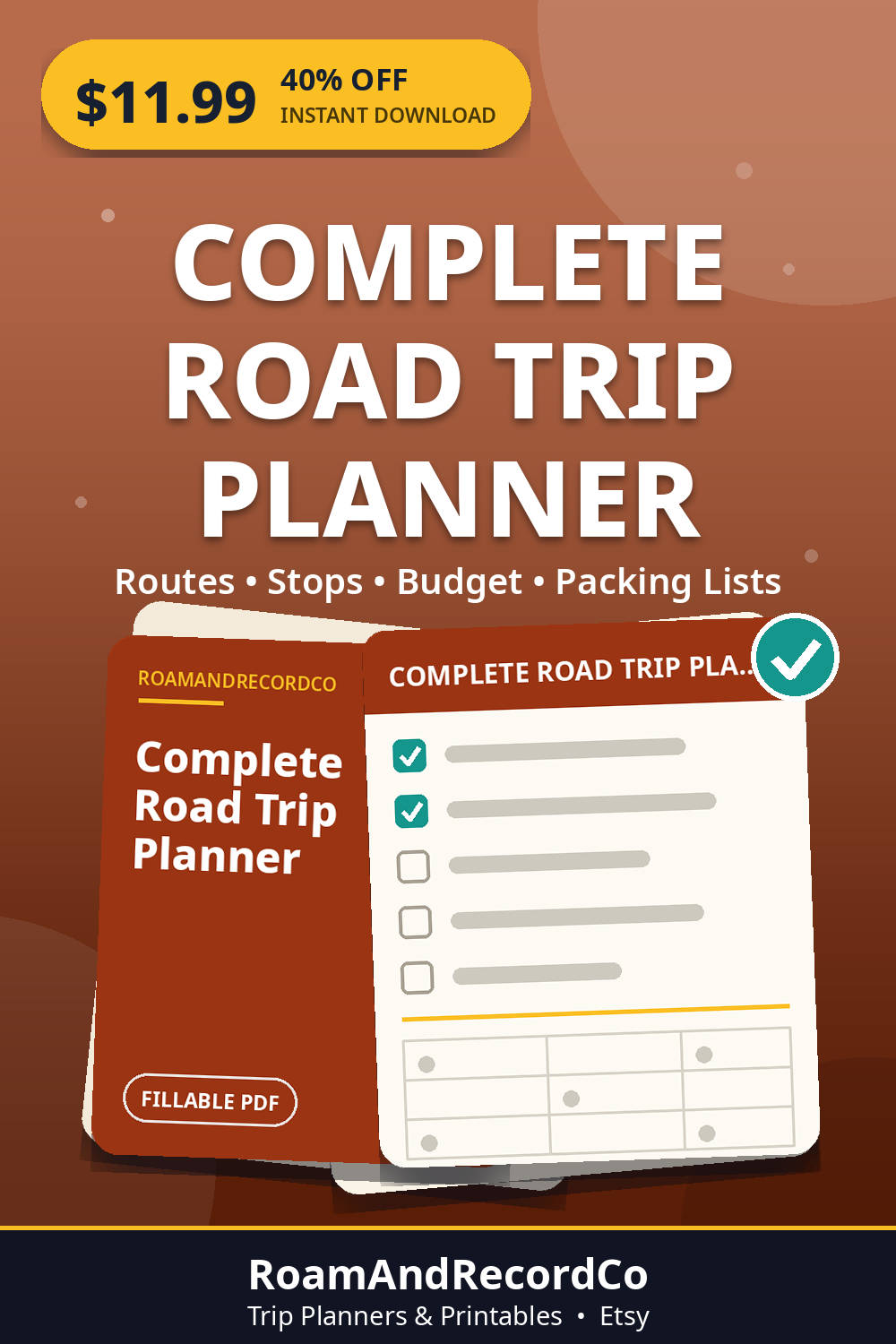
Complete Road Trip Planner
Fillable PDF · Instant download · US Letter + A4 · No app needed.
The Car Kit: Keep the Vehicle Happy
Your car is the most important piece of gear on the trip, so pack for it first. Start with jumper cables or, better, a portable lithium jump starter (about the size of a paperback, $50 to $80, and it works without a second vehicle). Add a tire pressure gauge — check pressures the morning you leave, including the spare, since an under-inflated spare is just a heavy decoration.
Confirm the spare tire, jack, and lug wrench are actually in the vehicle and that you know where they are; on many SUVs the spare lives under the cargo floor or beneath the rear bumper. Top off windshield washer fluid, check oil and coolant levels, and note your roadside assistance number in your phone — whether that is AAA, your insurer's roadside program, or the car manufacturer's helpline.
Inside the cabin, pack a phone mount for navigation, a dual-port car charger or a 12-volt splitter if multiple devices need power, and a small trash bag or bin for the back seat. A roll of paper towels and a pack of cleaning wipes handle spills, sticky hands, and bug-splattered windshields at fuel stops. Keep the owner's manual in the glove box; if a warning light appears in rural Nebraska, you want the answer in the car, not in a search result with no signal.
The Cooler: Pack It Like a Pro
A well-packed cooler saves $30 to $50 a day in restaurant and convenience-store spending for a family of four, and it keeps everyone fed between towns that are farther apart than the map suggests. Choose a hard-sided cooler for trips longer than a day — it holds ice far longer than a soft tote — and pre-chill it the night before with a bag of sacrificial ice or frozen water bottles.
Pack in layers, bottom to top: frozen items and ice packs on the bottom, then raw or perishable foods you will use later, then drinks and snacks you will grab often on top. Keep a separate small bag or the top layer for drinks so you are not digging past the sandwich meat every time someone wants water. Freeze water bottles instead of buying ice when you can — they keep everything cold and become drinking water as they melt.
Food safety has real rules on the road: keep the cooler at or below 40°F, open it as little as possible, and follow the two-hour rule — perishable food left at warm temperatures for more than two hours should be tossed. In summer heat, that window shrinks to one hour. Plan cooler meals for the first two days and restock ice or switch to shelf-stable foods after that.
Pack per person per day roughly: a half-gallon of water, two to three drinks, sandwich or wrap ingredients, fruit, and salty and sweet snacks. For a family of four on a five-day drive, that is about ten gallons of water equivalent, forty drinks, and a serious quantity of granola bars — buy them at a warehouse store before you leave, not at highway exits.
Comfort and Entertainment: Survive the Long Stretches
Comfort gear is what separates a trip you remember fondly from one you merely endure. Each traveler gets a small personal bag with their essentials: sunglasses, sunscreen, a refillable water bottle, wet wipes, hand sanitizer, tissues, lip balm, and any medications. Add one real pillow per person — not a neck pillow, a bed pillow — plus a light blanket or sleeping bag for naps and chilly mountain passes.
Snacks deserve strategy, not just volume. Pack in threes: something salty (pretzels, popcorn, nuts), something sweet (dried fruit, chocolate, gummies), and something with protein (jerky, cheese sticks, peanut butter packets). Protein is the difference between satisfied passengers and a back seat full of sugar-crash gremlins. Avoid anything crumbly, melty, or strong-smelling in a closed car for eight hours.
For entertainment, download everything before you leave — cell signal dies in exactly the scenic places you most want it. Queue audiobooks (a 10-hour novel covers a full driving day), make a collaborative playlist, and download podcast episodes. Classic car games still work: the license plate game, 20 questions, the alphabet game with road signs, and "would you rather" for teenagers. Traveling with kids? Add activity books, coloring supplies, a tablet loaded with movies plus headphones, and a surprise bag of small new toys revealed one per driving day — novelty is the most powerful boredom antidote known to parenting.
The Emergency Kit: Hope You Never Open It
Assemble a dedicated emergency bin and keep it accessible — not buried under suitcases. The core list: a flashlight plus spare batteries, a basic first-aid kit (bandages, antiseptic, pain relievers, antihistamines, any prescription meds with a day of extra supply), a warm blanket or two, a gallon of water per person, and nonperishable snacks like energy bars.
Add basic tools: a multi-tool or screwdriver set, duct tape, zip ties, and bungee cords fix an astonishing range of roadside problems. A reflective warning triangle or vest is required by law in some states and wise in all of them. A small ABC fire extinguisher costs about $20 and belongs in every vehicle. Include paper copies of your insurance card, emergency contacts, and accommodation confirmations — phones die, and a dead phone in an unfamiliar town at midnight is a bad time to discover you memorized nothing.
If you take daily medication, pack it in its original labeled container in your personal bag, never in checked-style trunk luggage, with at least two extra days' supply beyond the trip length. The same goes for glasses, contacts and solution, and EpiPens or inhalers.
Trunk Organization: Everything in Its Place
How you load the trunk determines how you feel at every stop. Use soft duffel bags instead of hard suitcases — they squeeze into odd spaces and stack neatly. Packing cubes or gallon zip bags grouped by day ("Day 3 clothes") beat digging through a whole bag at every hotel.
Load in reverse order of need: the emergency kit and cooler go in last so they are accessible at every stop; suitcases you will not touch until the hotel go in first. Keep one "day bag" in the back seat with the cooler top layer, snacks, entertainment, chargers, and wipes — everything you need without opening the trunk at a rest stop.
A trunk organizer or a couple of sturdy milk-crate-style bins keeps the cooler, emergency kit, and loose gear from sliding into chaos on mountain curves. If the car is packed to the roof, a lightweight cargo bag on a roof rack ($60 to $120) buys back your rear visibility — never stack luggage above the seatbacks inside the cabin.
The Night-Before Checklist
Run this list the evening before departure, when stores are still open and problems are still fixable:
- Fuel tank full; tire pressures checked including the spare
- Oil, coolant, and washer fluid levels verified
- Phone mount, chargers, and cables packed and tested
- Cooler pre-chilled; first two days of cooler food packed
- All devices charged; entertainment downloaded for offline use
- Medications, glasses, and documents in personal bags, not the trunk
- Hotel confirmations saved offline and printed as backup
- Home secured: lights on timers, mail held, a neighbor informed
- Snacks, water, and the day bag staged by the front door
- Emergency kit bin loaded last, fully accessible
Ten minutes with this list beats an hour of backtracking on departure morning.
Keep Every List in One Place
The difference between a packing list on a sticky note and one that actually works is having it all in a single system you check twice: once while packing, once before the wheels roll. A dedicated road trip planner like the Complete Road Trip Planner keeps the car kit, cooler inventory, emergency checklist, daily mileage log, and budget pages together, so nothing lives in your head and nothing gets forgotten at home.
Frequently Asked Questions
What should I always keep in my car for a road trip? Jumper cables or a portable jump starter, a tire pressure gauge, a verified spare tire with jack and lug wrench, washer fluid, paper towels, a phone mount and car charger, trash bags, and your roadside assistance number. Those nine items solve the large majority of roadside problems.
How do I keep food cold in a cooler for a long drive? Pre-chill the cooler overnight, use frozen water bottles or block ice instead of cubes, pack in layers with frozen items on the bottom, keep the cooler in the car's shade rather than the trunk if possible, and open it as little as you can. Drain meltwater only when it is no longer keeping things cold.
How much water should I pack per person for a road trip? Plan on a half-gallon of drinking water per person per day, plus extra for the emergency kit — one gallon per person stored separately. For a family of four on a five-day trip, that is ten gallons of drinking water plus four gallons of emergency reserve.
What is the best way to organize a car trunk for a road trip? Use soft duffels instead of hard suitcases, group clothes by day in packing cubes, load in reverse order of need with the cooler and emergency kit most accessible, and keep a day bag in the back seat so rest stops never require opening the trunk.
What entertainment works best for long drives with kids? Downloaded audiobooks and movies (no signal needed), a new small surprise toy revealed each driving day, activity and coloring books, classic games like the license plate game and 20 questions, and headphones for every screen. Novelty and variety beat volume.
Frequently Asked Questions
What should I always keep in my car for a road trip?
How do I keep food cold in a cooler for a long drive?
How much water should I pack per person for a road trip?
What is the best way to organize a car trunk for a road trip?
What entertainment works best for long drives with kids?
Complete Road Trip Planner
Fillable PDF · Instant download · US Letter + A4 · No app needed.