The advertisement says $499 per person for a seven-day Caribbean cruise, and for about ten seconds you believe the whole vacation will cost a thousand dollars. Then reality boards the ship with you: the daily gratuity charge on your onboard account, the $14 cocktails, the $189 snorkeling excursion in Cozumel, the Wi-Fi package so you can text the kids back home. Most first-time cruisers spend 40 to 60 percent more than the advertised fare once every onboard charge is tallied.
That gap between the fare and the final folio is exactly why a cruise budget planner matters. A cruise fare is best understood as a cover charge: it gets you the cabin, the main dining room, the pool deck, and the evening shows. Almost everything else — drinks beyond the basics, shore excursions, specialty restaurants, internet, photos, spa treatments — is priced separately and added to your onboard account, which you settle at the end of the sailing.
This guide covers every real cost of a cruise, line by line: what the fare includes, how gratuities work, the honest math on drink packages, why excursions are the biggest budget buster, a sample seven-day budget for two at three spending levels, and ten money-saving tricks.
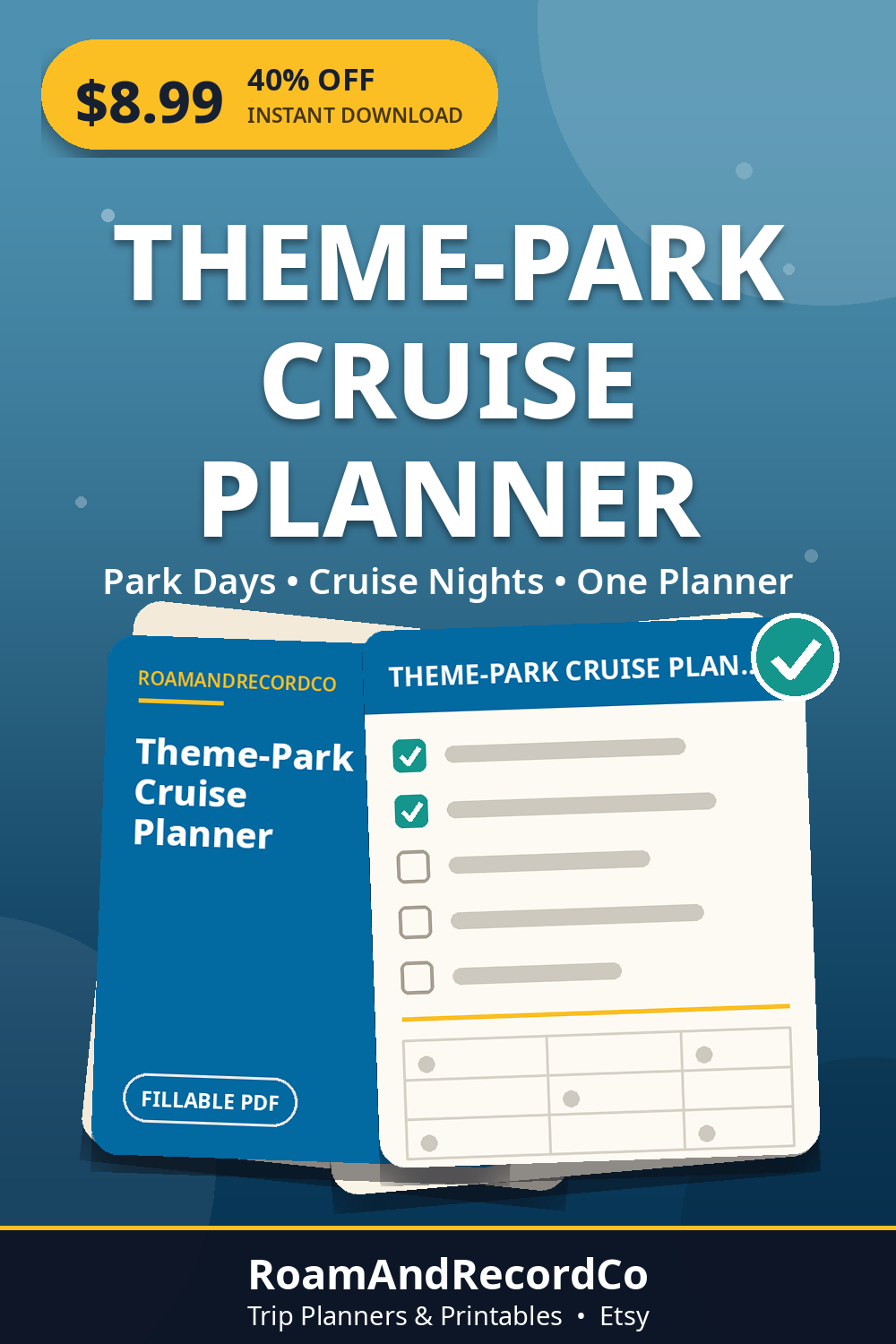
Theme-Park Cruise and Vacation Planner
Fillable PDF · Instant download · US Letter + A4 · No app needed.
The Fare Is Just the Starting Line
Your base fare covers the cabin for the length of the sailing, all meals in the main dining room and buffet, the pool and fitness center, most daytime activities, and the evening theater shows. What it does not automatically include is just as important: port taxes and fees are added on top of the advertised price, typically $100 to $300 per person for a Caribbean sailing, and they are mandatory.
Then there is everything before you ever step aboard. Unless you live near the port, budget for flights or a long drive, airport transfers or port parking ($15 to $25 per day at most US cruise terminals — a seven-day sailing means $105 to $175 just to park), and a hotel the night before. Veteran cruisers never fly in on embarkation day; one delayed flight can mean watching your ship sail without you. A pre-cruise hotel night near the port runs $120 to $200, and it buys you the most valuable thing on a cruise: a calm morning instead of a sprint through the airport.
Travel insurance deserves a line in the budget too. A comprehensive policy typically costs 4 to 8 percent of your prepaid trip cost and covers trip cancellation, interruption, and — critically — medical evacuation, which your regular health insurance may not cover in international waters. For a $3,000 cruise, expect $120 to $240 for a solid policy.
Gratuities: The Daily Charge You Cannot Skip
Nearly every major cruise line adds an automatic daily gratuity — often called a service charge or crew appreciation — to your onboard account. Expect roughly $16 to $20 per person per day in a standard cabin, with suite guests charged a higher tier. On a seven-day sailing for two people, that is $224 to $280 added to your folio before you buy a single drink.
These charges go to the crew members who serve you: dining room staff, cabin stewards, and behind-the-scenes teams. Most lines let you prepay gratuities before sailing, which is worth doing for one simple reason — it locks the expense into your pre-trip budget instead of letting it surprise you onboard. A few lines still allow guests to adjust the amount at guest services, but the honest approach is to treat this charge as fixed and plan around it.
Room service, bar purchases, and spa treatments usually carry their own automatic gratuity of 18 to 20 percent on top, so factor that into every onboard purchase you make.
Drinks: Do the Math Before You Buy the Package
This is where cruise budgets most often explode, because the math is counterintuitive. Expect to pay roughly $9 to $14 for a cocktail, $7 to $9 for a beer, $10 to $13 for a glass of wine, $3 to $4 for a soda, and $4 to $6 for a specialty coffee. Those prices look manageable until day three, when two poolside cocktails, wine at dinner, and a couple of sodas have quietly added $80 to your account.
Drink packages typically cost $65 to $100 per person per day, plus an automatic 18 to 20 percent gratuity on the package price itself. At $80 per day plus gratuity, a package costs about $95 per person per day — meaning you need to drink roughly six to eight alcoholic drinks every single day of the cruise to break even. On port days, when you are off the ship for six to eight hours, that is a punishing pace.
The packages also come with strings attached: on most lines, every adult in the cabin must purchase the package if one person does, and sharing is prohibited. Before buying, do an honest accounting of your habits. Moderate drinkers — two or three drinks a day — almost always spend less paying à la carte.
There are legitimate ways to cut the bar bill without a package. Many cruise lines allow each cabin to bring one or two bottles of wine aboard at embarkation (a corkage fee of around $15 to $25 may apply in the dining room). The buffet and main dining room serve water, lemonade, iced tea, and regular coffee free all day. And on port days, enjoy local bars and beach clubs ashore, where drinks often cost half the shipboard price.
Shore Excursions: The Biggest Budget Buster
Excursions are the single largest discretionary expense on most cruises, and the one travelers underestimate most. Ship-sponsored excursions typically run $75 to $250 per person: a beach break with lunch might be $89, a catamaran snorkel sail $129, a Mayan ruins tour from Cozumel $159. Visit three or four ports and do an excursion at each, and two people can spend $600 to $1,600 on excursions alone — sometimes more than the fare supplement for an entire cabin upgrade.
You have three options at every port. Ship excursions cost the most but guarantee the ship waits if your tour runs late — a real consideration at tender ports or distant sites. Independent local operators booked online in advance often charge 30 to 50 percent less for nearly identical experiences; read recent reviews carefully and confirm the operator's track record for returning guests on time. And the cheapest option is the do-it-yourself port day: a $20 taxi to a public beach, chair and umbrella rentals, a self-guided walk through the old town, or a public ferry to a nearby island.
A smart middle ground: book the ship's excursion only where logistics are risky — long drives to ruins, tender ports with tight all-aboard times — and go independent or DIY everywhere else. And remember that staying aboard on a port day is free: the pools are empty, the spa runs port-day specials, and lunch on the lido deck tastes better with no line.
The Costs Everyone Forgets
Beyond the big categories sits a long tail of smaller charges: specialty restaurants ($25 to $60 per person), Wi-Fi ($20 to $35 per day), photo packages (from around $100), the spa, the casino, the arcade, laundry, bingo, and the gift shops.
None are mandatory, which is why each needs a cap before you board — say $100 for photos, $50 for the casino — checked nightly in the cruise line's app, which shows your running folio total in real time.
Sample 7-Day Cruise Budget for Two
Here is what a seven-day Caribbean sailing realistically costs for two adults sharing an interior cabin, at three spending styles. Fares assume shoulder-season pricing booked a few months out.
| Expense | Budget | Moderate | Splurge |
|---|---|---|---|
| Cruise fare (2 people) | $1,100 | $1,600 | $2,600 |
| Port taxes and fees | $280 | $320 | $380 |
| Pre-cruise hotel (1 night) | $130 | $170 | $250 |
| Parking or transfers | $120 | $140 | $200 |
| Gratuities (7 days × 2) | $240 | $260 | $320 |
| Drinks | $150 | $450 | $1,100 |
| Shore excursions | $200 | $700 | $1,500 |
| Specialty dining | $0 | $120 | $300 |
| Wi-Fi | $0 | $120 | $200 |
| Photos, souvenirs, misc. | $100 | $250 | $500 |
| Travel insurance | $120 | $180 | $260 |
| Estimated total | $2,440 | $4,310 | $7,610 |
The lesson in the table: the fare is barely half the total at the moderate level. The two lines that separate "budget" from "splurge" are drinks and excursions — exactly the categories a planner helps you control.
10 Money-Saving Tricks That Actually Work
- Sail shoulder season. September, early December, and January (excluding holidays) routinely price 30 to 40 percent below peak weeks.
- Book an interior cabin first. You sleep, shower, and change there. Put the savings toward excursions and drinks you will remember.
- Bring the allowed wine. Most lines permit one to two bottles per cabin at embarkation, replacing $60 to $80 of shipboard wine.
- Carry a refillable water bottle. Ship tap water is desalinated, filtered, and safe to drink.
- Eat in the included dining rooms. Save specialty restaurants for one celebration night, not five.
- Watch for price drops after booking. If your fare drops before final payment, most lines will adjust it or upgrade your cabin - but only if you ask.
- Check your folio nightly. A two-minute review in the cruise app kills the end-of-cruise spending shock.
- Book excursions independently where it is safe. Reputable local operators routinely charge half the ship price for beach days and snorkeling trips.
- Use a travel rewards card for the fare. Pay the balance with a points-earning card, and pay it off immediately.
- Skip the drink package unless the math works. Track actual drinking for two days, multiply honestly, and compare.
Track Every Dollar in One Cruise Budget Planner
A cruise has more moving budget lines than almost any other vacation: pre-trip costs, the fare, daily gratuities, à la carte drinks, excursions per port, and a dozen small onboard charges. Keeping all of that in your head — or scattered across phone notes — is how the folio shock happens. A dedicated cruise budget planner like the Theme-Park Cruise and Vacation Planner gives every category its own page: fare and fee worksheets, a per-port excursion budget, a daily onboard spending log, and a packing and countdown section so the planning stays as organized as the money.
Frequently Asked Questions
How much spending money do I need for a 7-day cruise? Beyond the fare, taxes, and gratuities, budget $100 to $150 per person per day for a moderate experience covering drinks, one or two excursions, Wi-Fi, and incidentals. Frugal travelers who skip drink packages and go DIY in ports can manage on $40 to $60 per person per day.
Are cruise gratuities really mandatory? They are automatically added to your onboard account on nearly all major lines and very difficult to remove. Treat them as a fixed cost of $16 to $20 per person per day and budget accordingly; prepaying before you sail keeps them out of your onboard spending.
Is the drink package worth it on a cruise? Only if you consistently drink six to eight alcoholic beverages per day, every day, including port days. At $65 to $100 per person per day plus gratuity, moderate drinkers almost always spend less paying per drink — do the honest math before you board.
What is the cheapest month to take a Caribbean cruise? September is typically the cheapest, followed by early December and mid-January. These shoulder-season weeks can price 30 to 40 percent below Christmas, spring break, and summer sailings on the same ships and routes.
Do I really need travel insurance for a cruise? It is strongly recommended. Beyond cancellation coverage, a policy covers medical emergencies and evacuation at sea, which can cost tens of thousands of dollars out of pocket and is rarely covered by domestic health insurance.
Frequently Asked Questions
How much spending money do I need for a 7-day cruise?
Are cruise gratuities really mandatory?
Is the drink package worth it on a cruise?
What is the cheapest month to take a Caribbean cruise?
Do I really need travel insurance for a cruise?
Theme-Park Cruise and Vacation Planner
Fillable PDF · Instant download · US Letter + A4 · No app needed.